
The Mayo Curse: The Story, the Heartbreak and the Truth behind Ireland's Most Famous Legend
The Mayo curse claims the 1951 All-Ireland champions were condemned never to win again after disrespecting a funeral procession. Although there is no reliable evidence it happened, the legend has become a powerful symbol of Mayo GAA’s heartbreak, resilience and enduring hope.
The Mayo Curse: The Story, the Heartbreak and the Truth
Few stories in Irish sport have been repeated as often—or with as much dramatic enthusiasm—as the tale of the Mayo curse.
It is a story involving an All-Ireland-winning team, a funeral procession, an angry priest and a prophecy that appears to have followed Mayo football for generations. It has been blamed for missed frees, late goals, cruel rebounds, own goals and enough Croke Park heartbreak to test the faith of even the most optimistic Mayo supporter.
There is just one problem.
The curse probably never happened.
Where the Story Begins
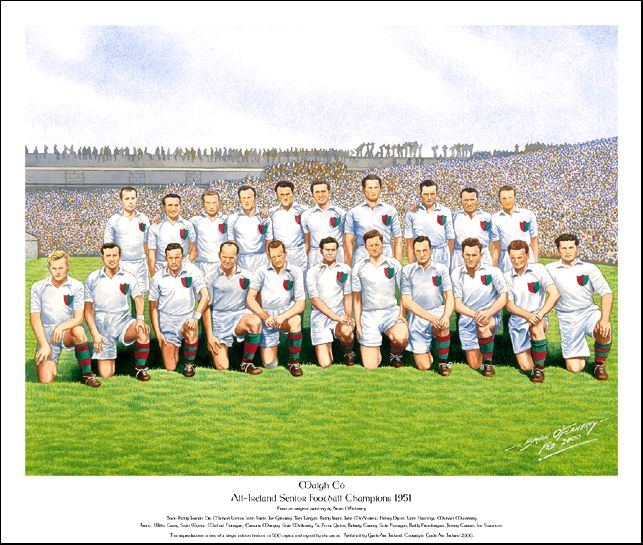
On 23 September 1951, Mayo defeated Meath by 2-8 to 0-9 in the All-Ireland Senior Football Championship final. It was the county’s second title in succession, following victory over Louth in 1950.
Captained by the great Seán Flanagan, Mayo were one of the finest football teams in Ireland. They had won back-to-back All-Irelands and appeared more than capable of remaining among the dominant forces in Gaelic football.
The players returned west as heroes, bringing the Sam Maguire Cup home to Mayo.
According to the most popular version of the legend, the victorious team was travelling through Foxford on an open-backed lorry when it encountered a funeral procession. The celebrations continued, and the team allegedly failed to stop or show the proper respect.
A priest attending the funeral was said to have been so angered that he declared Mayo would never win another All-Ireland while any member of the 1951 team remained alive.
It has all the ingredients of a classic Irish folktale: triumph, disrespect, religion, punishment and a prophecy passed from one generation to the next.
But like many good legends, the details change depending on who is telling it.
Was It Foxford or Somewhere Else?
In some versions, the incident happened in Foxford. In others, it occurred in another town or even as far away as Athlone.
Sometimes it was a priest who issued the curse. Other accounts blame the widow of the deceased, a Traveller woman or a mysterious local figure.
The team is variously described as travelling by bus, truck or open lorry. Even the behaviour that supposedly caused offence changes between retellings. Some say the players refused to stop. Others claim they continued singing, cheering or celebrating as the funeral passed.
That inconsistency is one of the biggest reasons historians and local people doubt the story.
Despite the alleged incident taking place publicly during a major homecoming celebration, no confirmed eyewitness to the curse has ever been identified. Research into local memory and archival records has also found no contemporary account of a priest condemning the team.
Most significantly, there appears to have been little or no public discussion of a Mayo curse for several decades after 1951. The legend only became widely known much later, particularly as Mayo’s defeats in All-Ireland finals began to accumulate.
What Did the 1951 Players Say?
The men at the centre of the story repeatedly dismissed it.
Paddy Prendergast and Padraig Carney, two members of the victorious team, said they were unaware of any funeral during the journey. Fr Peter Quinn, who was also part of the 1951 panel, reportedly described the story as nonsense.
Prendergast recalled that the crowds around the homecoming vehicle were so large that the players could barely see what was happening outside. That makes the idea of the team knowingly insulting a funeral procession even less convincing.
Carney did, however, identify something more believable: if enough people accept the story, it can begin to influence how defeats are interpreted.
Every missed opportunity becomes further evidence. Every strange bounce becomes fate. Every defeat adds another chapter to a story that already feels written.
How the Legend Grew
For decades after 1951, Mayo did not return to the senior All-Ireland final. That changed in 1989, when the county faced Cork.
Mayo lost.
They returned in 1996 and came agonisingly close against Meath. The first match ended in a draw after Meath produced a late equaliser. Mayo then lost the replay.
Another defeat followed against Kerry in 1997.
By then, a pattern was beginning to form. Mayo could reach the biggest stage in Gaelic football, but the final step remained just beyond them.
Further losses followed in 2004 and 2006 against Kerry. Donegal defeated Mayo in 2012, Dublin won in 2013, and the counties met again in the 2016 final.
That match contained almost everything required to strengthen belief in a supernatural force. Mayo conceded two own goals and still managed to earn a draw. Dublin then won the replay by a single point.
Mayo returned once more in 2017 and again lost to Dublin by one point.
In 2020, played in December because of the disruption caused by the COVID-19 pandemic, Dublin defeated Mayo again. Tyrone then overcame Mayo in the 2021 final, with Mayo missing a penalty before Tyrone took control of the contest.
It is easy to understand why the legend survived.
When a county experiences so many dramatic defeats, ordinary explanations can begin to feel inadequate. A curse provides a simple story for decades of complicated disappointment.
The Final Survivors
The wording of the supposed prophecy stated that Mayo would not win another All-Ireland while a member of the 1951 team remained alive.
As the years passed, attention increasingly turned toward the surviving players. This was often uncomfortable and unfair. Men who should have been celebrated as Mayo legends became unwilling characters in a supernatural countdown.
Paddy Prendergast, the last surviving player who took part in the 1951 final, died in September 2021 at the age of 95.
Some declared that the curse had therefore ended.
However, even this depended on how “member of the team” was defined. Other people associated with the panel, dressing room or homecoming remained alive after Prendergast’s death, illustrating once again how the legend could be adjusted whenever its supposed conditions changed.
Curse or Coincidence?
There is no credible evidence that Mayo football was cursed in 1951.
There is, however, plenty of evidence that Mayo repeatedly encountered outstanding opponents.
The county lost finals to dominant Kerry and Dublin teams, as well as talented sides from Cork, Meath, Donegal and Tyrone. Several contests were decided by the smallest possible margins.
Footballing explanations are less mysterious but far more convincing: missed chances, tactical decisions, injuries, pressure, exceptional opponents and the randomness present in every close sporting contest.
The supposed curse also ignores Mayo’s many successes. The county has won provincial championships, produced some of the finest footballers of the modern era and delivered performances that remain part of GAA history.
Reaching repeated All-Ireland finals is not evidence of failure. It is evidence of extraordinary consistency, resilience and talent.
Why Mayo People Keep Telling the Story
The Mayo curse survives because it is about more than whether a priest said a few angry words in 1951.
It gives shape to a shared experience.
Nearly every Mayo family has memories connected to the county team: journeys to Croke Park, flags outside houses, radios playing in kitchens, packed pubs, hopeful conversations and long drives home after another narrow defeat.
Parents who watched Mayo in the 1989 final later brought their children to see the teams of the 2010s. Some of those children are now bringing a new generation.
The story links them all.
It also reflects a particularly Mayo form of optimism. No matter how painful the previous defeat was, the flags eventually appear again. Calculations begin. Routes to the final are discussed. Someone confidently announces that this could finally be the year.
Supporting Mayo has never simply been about trophies. It is about belonging, persistence and the stubborn refusal to stop believing.
Remembering the Real Heroes of 1951
Perhaps the greatest problem with the curse is that it overshadows the achievement of the team it supposedly describes.
The players of 1951 were not careless figures in a ghost story. They were back-to-back All-Ireland champions.
Seán Flanagan and his teammates brought Sam Maguire to Mayo in consecutive years—an accomplishment generations of footballers across Ireland could only dream of matching.
Their story deserves to be remembered for what they achieved on the pitch, not for an event that most likely never took place.
Will the Mayo Curse Ever Truly Disappear?
A Mayo victory would certainly remove much of the legend’s power. Sam Maguire crossing the Shannon and returning to the county would produce celebrations unlike anything Mayo has experienced in generations.
Yet the curse would probably survive in some form—as a story told in pubs, homes, documentaries and conversations before important matches.
That is the strange thing about folklore. It does not need to be true to become part of a place.
The Mayo curse may be historically doubtful, inconsistent and unsupported by eyewitness evidence. But as a symbol of hope, heartbreak and endurance, it has become deeply woven into the county’s sporting identity.
Mayo were never cursed.
They have simply travelled one of the longest, most dramatic and most emotional roads in Irish sport.
And as every Mayo supporter knows, the journey is not over until Sam comes home and as an Offaly man, I hope it does for them someday.